
I gathered up all the songs I rated “Awesome” throughout each year of the 70s. There were just over 100 of them. And while the individual years weren’t ranked in numerical order, this decade summary is.
Continue reading “Top 100 Songs of the 1970s”Rants from the man who brings you DobberHockey and the Dobber Sports Network
I gathered up all the songs I rated “Awesome” throughout each year of the 70s. There were just over 100 of them. And while the individual years weren’t ranked in numerical order, this decade summary is.
Continue reading “Top 100 Songs of the 1970s”
This was a deep year, but a weak one. I’m actually not a huge Floyd fan, but in 1979 they were the cream of the crop with three of the five best songs (at least, according to my tastes). This was the year that Sony released the first Walkman. Remember those?
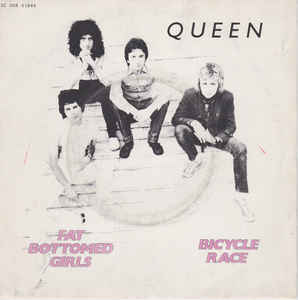
Much like 1977, generally speaking 1978 was not a great year for music. Unlike 1977, the ’78 edition of new releases didn’t have a Bat Out of Hell or Rumours to save it.
Steven King’s recent novel gives us his vision of how things could shake out if someone were to find a ‘time bubble’ that takes them back in time and that person were to undo a significant even in history. His “horror novel” days firmly behind him, King is barely hanging onto the “thriller” tag. The story was interesting, well written and well researched. As always, King keeps his characters interesting and worth reading cover to cover even if all they did was sweep the floor and later watch paint dry. He just has an interesting way of communicating, as anyone who has read King can attest. So yes, I did enjoy the book.
But I really am just “playing out the string”. King’s first 15 books were so great that I’ll read his next 100 even if they’re terrible. And his Dark Tower Series gave him a new niche that he excelled in. But really, aside from the Dark Tower, his books have been middling and this one is no exception. Enjoyable, but not fabulous. Intriguing, and it made you think, but it didn’t often make itself intense enough that you’ll miss sleep before putting the book down.
Glean from that what you will

Meat Loaf was always a curiosity to me. And I don’t mean his non-traditional rock look (i.e. not skinny and scraggly).
In the third book of the Neverwinter Saga, author R.A. Salvatore does a great job of developing the villains and creating their own little hierarchy. It sets them up nicely for appearances in future books, and it’s a well that can be drawn from time and again. Much like, if he needs to, he can go back to Menzobarranzan for dark characters and new plotlines (which he does in this book), Salvatore can now just as easily go to the Shadovar and the tieflings. Just as he can use the cool and interesting group of mercenaries Braegan D’Arthe, he can now also consider Cavus Dun.
The battle scenes continue to be the best part of Salvatore’s work, with Drizzt Do’Urden and Artemis Entreri at the forefront…and they continue to be awkward with Dahlia and her complicated staff weapon “Kozah’s Needle”. Kudos to Salvatore for successfully making us like the new character Ambergris, a dwarf warrior-wizard and clever schemer. And I also see a lot of potential in Afafrenfere the warrior-monk.
Drizzt is a great character as a loner, along with his panther Guenhwyvar. But his stories are enjoyable with companions as well, provided the companions are likable. The new cast is starting to shape up nicely, and at this point my only criticism is the silly weapon that Dahlia wields. Actually, it’s a great weapon – just confusing to describe, and even more confusing to follow.
Now figure out a way to keep Artemis popping back into storylines (to say nothing about the flashy and charismatic dark elf Jarlaxle).
I read this, the 17th Drizzt Do’Urden novel, about two months ago. This is the second book of the Neverwinter Saga. There are spoilers here, of previous Drizzt books.
While I really like the idea of continuing with the Drizzt character decades later and leaving the familiar friends behind, I’m having a hard time getting attached to the new group of characters. R.A. Salvatore, while not my favorite author, is definitely my favorite writer when it comes to battle scenes. But his attempt to describe Dahlia’s battle scenes are awkward, to say the least. It’s as if he challenged himself with coming up with a complicated weapon – Kozah’s Needle – and still successfully paint the picture for the reader. He falls short. The battle scenes are still interesting, but more than a little confusing. Kozah’s Needle is a staff that can be turned into flails or a tri-staff. The charging up to create lightning – that’s a nice touch. But describing her moves with a tri-staff that suddenly turns into flails, loses me.
The book carries a mediocre plot, but is saved by a pretty good cast of villains as well as the return of one of the best characters in the Drizzt fantasy world. The assassin Artemis Entreri. His appearance, hinted at heavily throughout, is well explained. I can buy the backstory of the reasons that he is still alive fifty years after he should be.
I’ve always felt that if books about Drizzt are to be written about his adventures decades after the original companions were alive, that the new characters should be developed first, and then bring Drizzt in later. As in halfway through the second book. However, bringing back Entreri has proven to be a good alternative and makes this Saga worth reading.
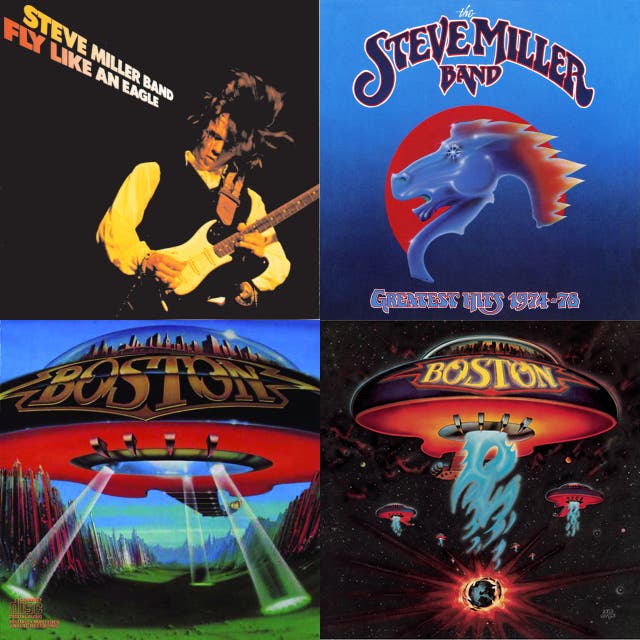
There were far too many disco-influenced songs released in ’76 for my taste, but fortunately bands such as the Eagles, Boston, Nazareth and Steve Miller gave us rock fans something to take away from this year.
On many lists, this epic high fantasy series ranks among the two or three best ever written. On others, it’s further down. But nobody questions Steven Erikson’s The Malazan Book of the Fallen as being one of the most thorough, unique and descriptive worlds ever created.
I have decided (to at least try) to review every book I read, right here for my imaginary audience. I read often and I read quickly, so this could be a big undertaking. Normally, I will be reviewing books as soon as I complete them. But for my first review, I wanted to tackle this huge series that I finished last summer. But because so much time has passed, the individual books tend to blend together. So it’s easier to just tackle it as a whole.
Recommendation
I would recommend this book to you, if you are all of the following:
1. Very patient
2. An absolute die-hard of the high fantasy genre
3. Are skilled at skimming parts in which the author rambles. Because Erikson is very detailed, particularly about his characters (of which he introduces hundreds to us).
The series begins in the middle of a war – an interesting decision in itself. The reader is thrown right into it and is almost expected to play catch up with what is going on, as if you maybe missed a book and started Book 2 by accident. But the picture is painted gradually, with the back story slowly being filled in, interspersed with the current story. It is a tale of war and magic, of gods both old and new. The characters that are introduced are fantastic and you will have more than a handful of “favorites”. By the middle of the 10-book set, you will have a hierarchy in your mind as to which characters are more powerful than others, a firm understanding of feuds and potential battles, and your anticipation of the ensuing climax is very real.
And when Erikson runs out of characters to make you love, he shifts the scene to another continent and brings you an all new cast. The final books combine both tremendous casts as the elite (but banished) forces of the Malazan Empire travel to the other continent to do battle there.
While there are easily a dozen characters in these books I would call ‘favorites’, plus a dozen more whom I love to hate, Erikson introduced to me my favorite character, possibly in any book – Karsa Orlong. The entire 11,000 page story is worth the read just for Karsa’s story. He was first introduced in the second novel Deadhouse Gates, known then only as Toblakai (which is actually his race – a race of savage giants standing about nine feet tall). But his backstory comes two books later – in House of Chains – which may be my favorite book thanks to that back story. I only wish he had a bigger role in later books.
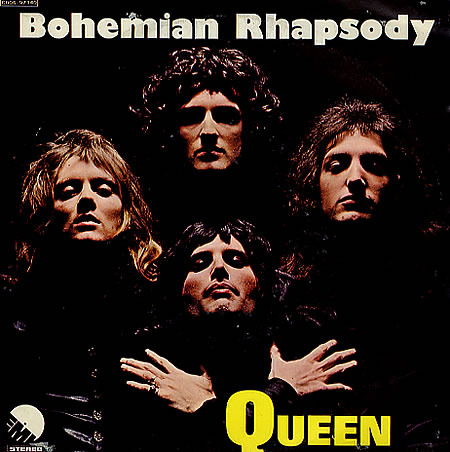
The year of the Bohemian? This was a year for memorable tunes – and at the time I was too young to know it. But some of these are just too timeless for that to matter.
 Dobber's Take
Things people have said about this, that I don’t care about